


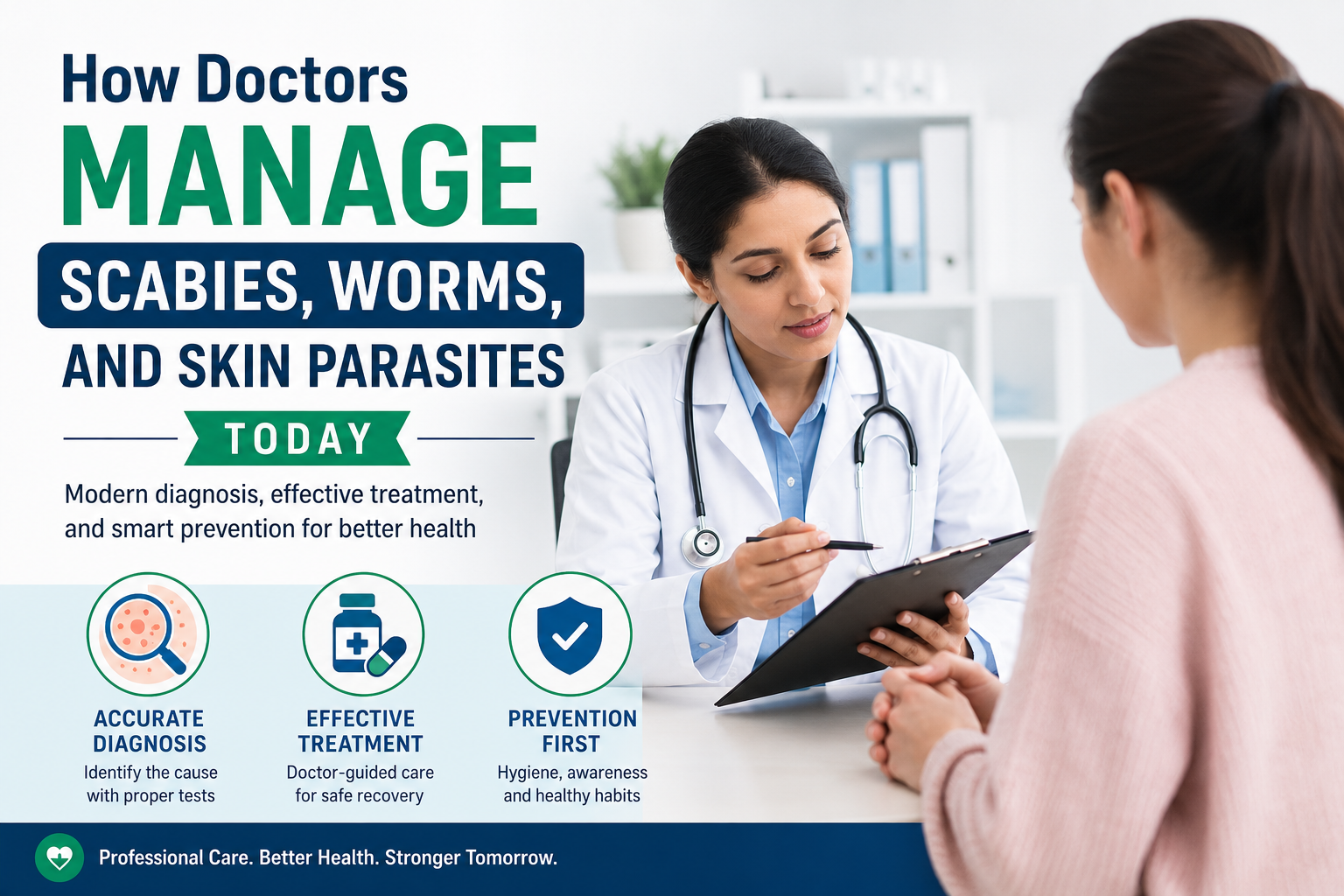
Managing Skin Parasites: How Doctors Treat Scabies, Worms, and Infections
Parasitic infections continue to affect millions of people worldwide, especially in areas with crowded living conditions, poor sanitation, or limited access to healthcare. Managing Skin Parasites has become an important part of modern healthcare because conditions such as scabies, intestinal worms, and other parasite-related infections can cause discomfort, itching, digestive issues, fatigue, and various skin complications if left untreated.
Modern healthcare has significantly improved the way these conditions are identified, treated, and prevented. Today, doctors use a combination of medical evaluation, hygiene recommendations, lifestyle guidance, and carefully selected treatments to help patients recover safely and effectively. Early diagnosis and proper management play a major role in reducing complications and preventing the spread of infections.
This guide explains how healthcare professionals currently manage scabies, worms, and skin parasites while focusing on safe, educational, and medically responsible information.
Understanding Parasitic Infections
Parasites are organisms that survive by living on or inside another living being, known as the host. Some parasites affect the digestive system, while others live on the skin or within body tissues.
The most common types include:
- Intestinal worms
- Scabies mites
- Head lice
- Pinworms
- Roundworms
- Hookworms
- Tapeworms
- Skin parasites
These infections may spread through contaminated food or water, close skin contact, poor hygiene, infected animals, or shared personal items.
Although many parasitic infections are treatable, symptoms often go unnoticed during the early stages. This is why doctors encourage timely medical evaluation whenever unusual symptoms appear.
Common Symptoms Doctors Look For
Healthcare professionals usually begin with symptom analysis before recommending any testing or treatment plan. Symptoms vary depending on the type of parasite involved.
Symptoms of Scabies
Scabies is caused by tiny mites that burrow into the skin. Doctors commonly look for:
- Severe itching, especially at night
- Red bumps or rashes
- Thin burrow-like lines on the skin
- Skin irritation between fingers, wrists, or waistline
- Sores caused by scratching
Scabies spreads easily through close skin-to-skin contact, making early treatment important.
Symptoms of Intestinal Worms
Worm infections may affect both children and adults. Common symptoms include:
- Stomach pain
- Diarrhea
- Bloating
- Fatigue
- Weight loss
- Itching around the anal area
- Nausea
- Poor appetite
Some people may not experience symptoms initially, which is why regular health checkups can be useful in high-risk environments.
Symptoms of Other Skin Parasites
Skin parasites can create a range of visible and uncomfortable symptoms, including:
- Persistent itching
- Redness
- Small bumps or rashes
- Dry or flaky skin
- Hair irritation
- Skin inflammation
Doctors often examine the affected area carefully before determining the exact cause.
How Doctors Diagnose Parasitic Infections
Accurate diagnosis is one of the most important parts of treatment. Modern healthcare uses several methods to confirm infections safely and effectively.
Physical Examination
Doctors begin by examining symptoms and affected body areas. In cases like scabies, visual skin examination is often very helpful.
Medical History Review
Patients are usually asked about:
- Recent travel
- Close contact with infected individuals
- Hygiene conditions
- Food and water exposure
- Existing medical conditions
This information helps healthcare providers narrow down possible causes.
Laboratory Testing
For intestinal parasites, stool sample testing is commonly recommended. These tests help identify parasite eggs or organisms inside the digestive system.
Skin scraping tests may also be used for certain skin infections.
Additional Diagnostic Methods
In rare or complicated cases, doctors may use:
- Blood tests
- Imaging scans
- Microscopic examination
- Allergy assessments
These tests help confirm infections and rule out other skin or digestive conditions.
Modern Approaches to Managing Scabies
Scabies management today focuses on reducing symptoms, eliminating mites, and preventing reinfection.
Prescription Treatments
Doctors may prescribe medicated creams, lotions, or oral treatments depending on the severity of the infection. These treatments are selected based on the patient’s age, medical history, and overall health condition.
Self-medication is generally discouraged because improper use can worsen skin irritation or delay recovery.
Hygiene Recommendations
Doctors strongly emphasize hygiene measures during treatment. Common recommendations include:
- Washing clothes and bedding in hot water
- Avoiding close physical contact temporarily
- Cleaning household surfaces
- Trimming nails to reduce scratching injuries
These steps help prevent the infection from spreading to family members or others nearby.
Managing Itching and Skin Irritation
Even after treatment begins, itching may continue for a short period. Doctors may suggest:
- Moisturizers
- Mild skin care products
- Antihistamines
- Gentle skin cleansing routines
Avoiding excessive scratching is important to reduce skin damage and secondary infections.
How Worm Infections Are Managed Today
Intestinal worms are among the most common parasitic infections worldwide. Fortunately, modern medical management has become highly effective.
Identifying the Type of Worm
Different worms require different approaches. Doctors first determine whether the infection involves:
- Roundworms
- Tapeworms
- Pinworms
- Hookworms
- Whipworms
The treatment strategy depends on the parasite type and severity of symptoms.
Treatment Planning
Doctors may recommend specific anti-parasitic therapies after proper diagnosis. Treatment duration and dosage vary based on:
- Age
- Body weight
- Severity of infection
- Existing medical conditions
Following medical instructions carefully is essential for successful recovery.
Nutritional Support
Some worm infections may reduce nutrient absorption in the body. Doctors sometimes advise:
- Iron-rich foods
- Hydration
- Balanced nutrition
- Vitamin support
Proper nutrition helps improve energy levels and overall recovery.
Preventing Reinfection
Prevention remains a major focus of modern parasite management. Doctors often recommend:
- Washing hands regularly
- Drinking clean water
- Cooking food properly
- Wearing footwear outdoors
- Maintaining toilet hygiene
Children are especially vulnerable to reinfection, making hygiene education extremely important.
Managing Skin Parasites Safely
Skin parasites require careful management because symptoms can resemble allergies, fungal infections, or eczema.
Accurate Identification
Doctors avoid guessing the condition without proper examination. Misdiagnosis can delay effective care and worsen symptoms.
Personalized Skin Care
Treatment plans may include:
- Gentle cleansing products
- Skin-protective moisturizers
- Medicated topical solutions
- Anti-itch support
Patients are usually advised to avoid harsh chemical products during recovery.
Monitoring Skin Recovery
Doctors often monitor whether:
- Redness decreases
- Itching improves
- Rashes heal properly
- Secondary infections develop
Follow-up visits may be necessary in severe cases.
Why Professional Medical Guidance Matters
Online health information has become widely available, but self-diagnosis can still create risks. Many skin conditions and digestive problems appear similar, making professional medical evaluation extremely important.
Doctors help patients by:
- Confirming the correct diagnosis
- Reducing treatment risks
- Preventing complications
- Monitoring recovery progress
- Advising on hygiene and prevention
Seeking qualified healthcare advice is always safer than relying solely on internet searches or unverified remedies.
The Importance of Hygiene in Parasite Prevention
Modern healthcare strongly emphasizes prevention because parasitic infections often spread through poor sanitation or contaminated environments.
Key Hygiene Practices
Doctors commonly recommend:
- Frequent handwashing
- Proper food preparation
- Safe drinking water
- Clean bedding and clothing
- Regular bathing
- Nail hygiene
Simple hygiene habits can significantly reduce infection risks.
Household Prevention Tips
When one family member develops a contagious parasitic infection, healthcare professionals may suggest:
- Cleaning shared surfaces
- Avoiding towel sharing
- Washing fabrics thoroughly
- Treating close contacts if necessary
These preventive measures help stop repeated infections.
How Lifestyle and Environment Affect Risk
Certain environments increase exposure to parasites more than others.
Higher-Risk Situations
Doctors often see higher infection rates in:
- Crowded living spaces
- Areas with poor sanitation
- Shared accommodation
- Schools and daycare centers
- Places with unsafe water supplies
Travelers visiting tropical or rural regions may also face increased exposure.
Supporting Long-Term Wellness
Doctors encourage healthy routines to support overall wellness and lower infection risks, including:
- Balanced nutrition
- Good hydration
- Physical activity
- Adequate sleep
- Stress management
A healthier body may respond better to infections and recovery.
Common Myths About Parasites
Many misconceptions still surround parasitic infections today.
Myth 1: Only Children Get Worms
Adults can also develop parasitic infections, especially through contaminated food, water, or travel exposure.
Myth 2: Parasites Always Cause Severe Symptoms
Some infections remain mild or symptom-free during early stages.
Myth 3: Poor Hygiene Is the Only Cause
While hygiene matters, parasites can affect anyone through environmental exposure, travel, or close contact.
Myth 4: Home Remedies Always Work
Natural remedies may not eliminate certain infections completely. Professional diagnosis and treatment remain important.
When to See a Doctor
Doctors recommend seeking medical attention if symptoms persist or worsen.
Warning Signs Include:
- Severe itching
- Persistent stomach pain
- Unexplained weight loss
- Ongoing diarrhea
- Skin rashes that spread
- Sleep disturbance from itching
- Blood in stool
- Fever with skin symptoms
Early medical evaluation can prevent complications and improve recovery outcomes.
The Future of Parasite Management
Healthcare research continues to improve the diagnosis and management of parasitic infections. Modern medicine now focuses more on:
- Faster diagnosis
- Safer treatments
- Public health education
- Better hygiene awareness
- Reducing reinfection rates
Digital healthcare platforms and educational resources are also helping people understand symptoms earlier and seek timely care.
Final Thoughts
Managing Skin Parasites has become an important focus in modern healthcare as scabies, worms, and other parasitic infections continue to affect people worldwide. Through accurate diagnosis, proper hygiene practices, personalized treatment plans, and preventive care, doctors help patients recover safely while reducing the spread of infection.
Understanding symptoms early and seeking professional medical guidance can make a major difference in treatment success. While internet information can raise awareness, qualified healthcare evaluation remains the most reliable approach for proper diagnosis and safe management.
Maintaining good hygiene, healthy lifestyle habits, and regular medical attention when needed can help individuals protect themselves and their families from many common parasitic infections.
Frequently Asked Questions (FAQs)
Can scabies go away without treatment?
Scabies usually requires proper medical treatment. Without management, the infection may continue spreading and worsen over time.
Are worm infections common in adults?
Yes, adults can also develop intestinal worm infections through contaminated food, water, travel, or environmental exposure.
How do doctors confirm parasite infections?
Doctors may use physical examinations, symptom reviews, stool tests, skin assessments, or laboratory testing depending on the condition.
Can parasites spread between family members?
Certain parasitic infections, including scabies, can spread through close contact or shared items if precautions are not taken.
What is the best way to prevent parasitic infections?
Good hygiene, safe food preparation, clean drinking water, and regular handwashing are among the most effective prevention methods.
Recent Posts
- Questions to Ask Your Doctor Before Taking Ivermectin
- Ivermectin Uses: Approved Medical Uses, Benefits, and Safety Information
- Scabies vs Bed Bug Bites: How to Tell the Difference (Symptoms & Treatment)
- Scabies: Symptoms, Causes, and How Ivermectin Treats It
- Ivermectin for Parasitic Worm Infections: Uses, Dosage, and What to Expect


