


How Ivermectin Works in the Human Body: Mechanism, Safety, and Benefits
When it comes to effective antiparasitic medicines, ivermectin stands out as one of the most studied and widely used treatments worldwide. Originally developed to treat parasitic infections in animals, it quickly became a vital medication for humans suffering from parasitic conditions such as scabies, onchocerciasis, and strongyloidiasis. Over the years, scientists have continued to uncover how this powerful drug works at the molecular level, revealing its impressive ability to target parasites without causing harm to the host.
In this detailed guide, we’ll explore exactly how ivermectin works inside the body, its clinical uses, safety profile, and the science behind its broad therapeutic potential.
The Discovery and Evolution of Ivermectin
The story of ivermectin began in the late 1970s when Japanese microbiologist Satoshi Ōmura and Irish scientist William C. Campbell discovered a new strain of bacteria from soil samples—Streptomyces avermitilis. This bacterium produced a compound with remarkable antiparasitic properties, later developed into what we now know as ivermectin.
First introduced for veterinary use, the drug showed exceptional results in controlling parasites in livestock. Its success led researchers to test its effectiveness in humans, where it became a game-changer for diseases like river blindness (onchocerciasis). The discovery was so significant that Ōmura and Campbell were awarded the 2015 Nobel Prize in Physiology or Medicine.
How Ivermectin Targets Parasites
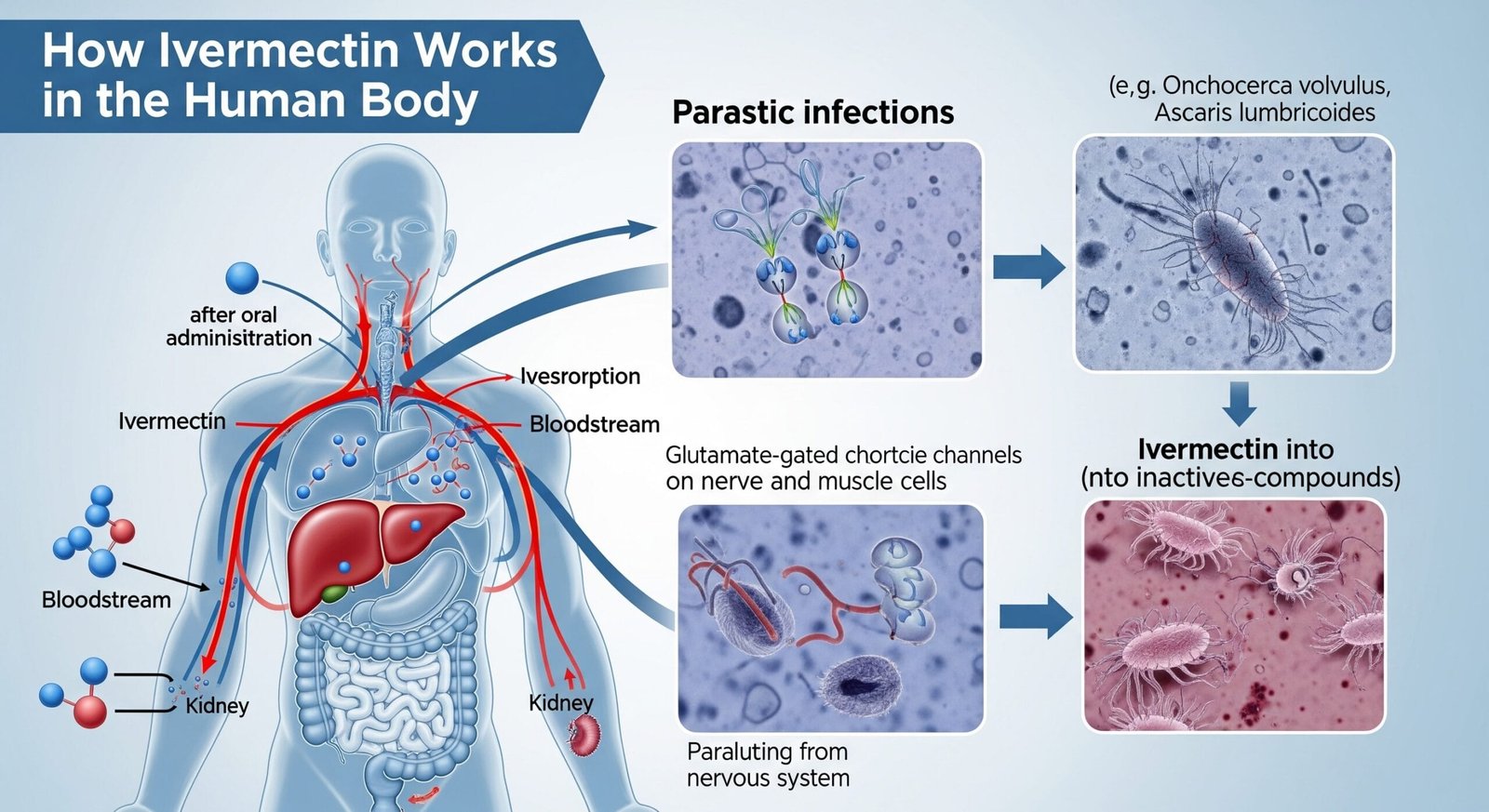
At the core of ivermectin’s effectiveness lies its unique mode of action. The drug selectively binds to specific ion channels in nerve and muscle cells of parasites, known as glutamate-gated chloride channels. When these channels open, chloride ions flood into the cells, leading to hyperpolarization — a process that paralyzes and eventually kills the parasite.
Here’s a simplified step-by-step breakdown:
-
Binding to the parasite’s nerve and muscle cells:
Ivermectin attaches to chloride channels that are only found in invertebrate nerve and muscle cells. -
Disruption of cell signaling:
By increasing the flow of chloride ions, the drug prevents normal electrical activity within the parasite’s nervous system. -
Paralysis and death of the parasite:
As a result, the parasite cannot move, feed, or reproduce, ultimately leading to its death. -
Selectivity for parasites, not humans:
Human nerve and muscle cells lack these glutamate-gated chloride channels. Additionally, ivermectin doesn’t cross the human blood-brain barrier, making it safe when used at recommended doses.
This selective mechanism is what makes ivermectin both effective and remarkably safe for human use.
Diseases and Conditions Treated with Ivermectin
Over the decades, ivermectin has proven effective against a wide range of internal and external parasites. Some of the most common conditions it treats include:
1. Onchocerciasis (River Blindness)
One of the earliest and most significant uses of ivermectin is in combating onchocerciasis, a disease caused by Onchocerca volvulus worms transmitted by blackflies. The drug eliminates microfilariae (larval worms), reducing transmission and preventing blindness and skin damage.
2. Strongyloidiasis
This condition, caused by Strongyloides stercoralis, is a chronic intestinal infection. Ivermectin helps clear the parasite from the body by killing larvae and adult worms.
3. Scabies
Scabies, caused by the Sarcoptes scabiei mite, leads to intense itching and skin irritation. Oral ivermectin is often prescribed when topical treatments fail, providing relief by killing the mites and their eggs.
4. Head Lice (Pediculosis)
Although topical treatments are common, ivermectin is an alternative oral or topical option for resistant cases. It works by paralyzing and killing lice, preventing them from reproducing.
5. Filariasis
This mosquito-borne disease can cause swelling and tissue damage. Ivermectin helps reduce the number of microfilariae in the bloodstream, decreasing transmission rates.
Pharmacokinetics: How Ivermectin Moves Through the Body
Once taken orally, ivermectin is absorbed through the intestinal tract and distributed throughout the body. It binds strongly to plasma proteins and accumulates in fatty tissues, allowing for a prolonged therapeutic effect.
Here’s what happens step by step:
-
Absorption: The drug reaches peak plasma concentration about 4–5 hours after ingestion.
-
Distribution: It is lipophilic, meaning it dissolves in fats and spreads through tissues where parasites often reside.
-
Metabolism: The liver breaks it down primarily through the CYP3A4 enzyme.
-
Elimination: Ivermectin is mainly excreted through feces, with only small amounts appearing in urine.
This pharmacological profile ensures that a single dose can remain active in the body long enough to effectively eliminate most parasites.
Why Ivermectin Is Safe for Humans
The safety of ivermectin stems from its selective toxicity — it targets parasites without affecting human cells. Here’s why it’s safe:
-
No target receptors in humans: The drug’s binding sites are not present in human cells.
-
Limited blood-brain barrier penetration: This prevents it from affecting the central nervous system.
-
Short-term presence in the body: It does its job and exits efficiently through metabolic pathways.
However, like all medicines, it should be taken only under medical supervision. Overuse or incorrect dosing can lead to side effects such as dizziness, nausea, or mild skin reactions.
The Science Behind Ivermectin’s Selectivity
One of the most remarkable aspects of ivermectin is how it distinguishes between parasite and human cells. This selectivity is due to differences in the structure and function of the ion channels.
In parasites, glutamate-gated chloride channels are critical for nerve and muscle signaling. In humans, however, these channels are absent, and neurotransmission relies on different receptors. Additionally, ivermectin has a high molecular weight and does not easily cross the human blood-brain barrier, ensuring it remains outside the central nervous system.
This molecular precision is what makes ivermectin such a valuable therapeutic agent.
Ivermectin in Global Health Programs
The introduction of ivermectin has had a transformative impact on global public health. Through the Mectizan Donation Program, millions of doses have been distributed in developing countries, helping to nearly eliminate river blindness and drastically reduce cases of lymphatic filariasis.
According to the World Health Organization (WHO), ivermectin has been one of the most important tools in the fight against neglected tropical diseases. The drug’s affordability, safety, and effectiveness make it a cornerstone in parasitic disease control programs across Africa, Asia, and Latin America.
Beyond Parasitic Infections: Ongoing Research
While ivermectin is best known for treating parasitic infections, researchers continue exploring its broader therapeutic potential. Some studies have looked into its antiviral, anti-inflammatory, and antitumor properties.
1. Antiviral Research
Laboratory studies have shown that ivermectin can inhibit the replication of certain viruses in cell cultures. However, clinical evidence remains limited, and its use for viral infections should only occur under approved medical guidance.
2. Anti-inflammatory Potential
Recent research suggests that ivermectin may have anti-inflammatory properties, helping modulate the immune response in certain conditions. This could expand its role in future therapeutic developments.
3. Cancer Studies
Preliminary investigations indicate that ivermectin might affect certain cellular pathways linked to tumor growth. While these findings are promising, more research is needed to confirm its potential as a cancer treatment.
Common Side Effects and Precautions
Ivermectin is generally well-tolerated, but like all medications, it can cause mild to moderate side effects in some individuals. Common reactions include:
-
Dizziness or mild headache
-
Nausea or diarrhea
-
Temporary skin rash or itching
-
Fatigue
In rare cases, allergic reactions may occur, particularly in patients heavily infested with parasites. It’s important to consult a doctor before starting treatment, especially for people with liver disorders or those taking other medications.
Precautions:
-
Avoid self-medication.
-
Follow the prescribed dosage carefully.
-
Store tablets in a cool, dry place.
-
Inform your doctor about any medical conditions or other drugs being used.
Dosage Guidelines Overview
The dosage of ivermectin varies depending on the condition being treated and body weight. It’s typically administered as a single oral dose of 150–200 µg/kg, sometimes repeated after a week or two. Always follow your healthcare provider’s instructions to ensure safe and effective treatment.
The Future of Ivermectin
As research continues, ivermectin remains a cornerstone of antiparasitic therapy and a symbol of how science can improve lives worldwide. With continued global access programs and further medical research, its potential uses may expand even more in the coming decades.
The success of ivermectin highlights the importance of collaboration between pharmaceutical research, public health initiatives, and global medical organizations. From treating millions of people suffering from neglected tropical diseases to inspiring new therapeutic pathways, ivermectin’s legacy continues to grow.
Conclusion
From a humble soil bacterium to a Nobel Prize-winning discovery, ivermectin has changed the course of medicine and saved millions of lives across the globe. Understanding how this remarkable drug works gives us insight into the incredible power of science and nature combined. As medical research continues to advance, ivermectin will likely remain a key player in both human and veterinary medicine — a true symbol of global health innovation.
For trusted and authentic information about ivermectin-based medicines, visit https://ivermectinpills.com/.


