


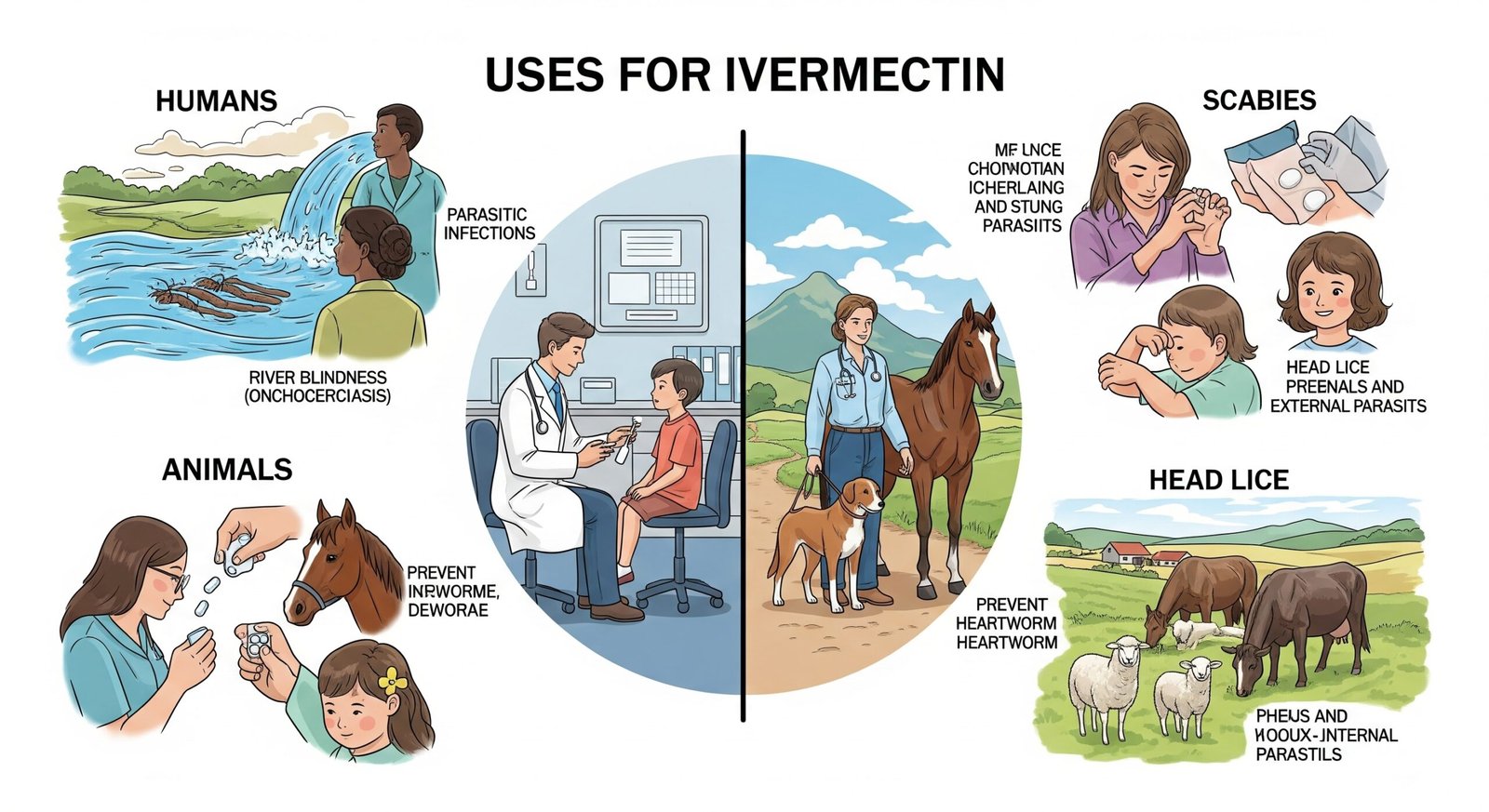
Uses for Ivermectin – Complete Guide with Benefits, Research, and Safety
Parasitic infections affect over 3.5 billion people globally, according to the World Health Organization (WHO). These conditions can range from mild skin irritations to severe, life-threatening illnesses. One of the most trusted medicines in treating such infections is ivermectin. Understanding the uses for ivermectin is important for patients, caregivers, and healthcare providers alike, as it continues to play a vital role in global health.
This blog explains ivermectin’s medical applications, safety, benefits, and real-world importance, with the latest insights that can help people make informed choices.
What is Ivermectin?
Ivermectin is an FDA-approved antiparasitic medicine that belongs to the avermectin drug class. It was discovered in the 1970s and quickly became one of the most widely prescribed treatments for parasitic infections. Its discovery earned the 2015 Nobel Prize in Physiology or Medicine because of its remarkable impact on public health.
It is listed in the WHO Model List of Essential Medicines, meaning it’s considered one of the safest and most effective drugs needed in a basic healthcare system.
How Does Ivermectin Work?
Ivermectin targets the nervous system of parasites. It binds to glutamate-gated chloride channels in nerve and muscle cells of the parasites, leading to:
-
Paralysis of the parasite
-
Inability to reproduce or feed
-
Eventual death of the organism
Humans are not affected in the same way because the drug does not cross into the human brain at normal doses, which makes it safe under proper use.
Conditions Treated with Ivermectin
Ivermectin has broad-spectrum activity and is prescribed worldwide for multiple parasitic conditions:
1. Scabies
-
Caused by tiny mites (Sarcoptes scabiei) burrowing under the skin.
-
Symptoms: Intense itching, worse at night, rashes, and skin irritation.
-
Ivermectin is prescribed when topical creams don’t work or in large outbreaks.
2. Head Lice
-
Affects children and adults worldwide.
-
Unlike shampoos and topical lotions, oral ivermectin provides a quick, effective solution.
-
Particularly helpful when lice are resistant to over-the-counter treatments.
3. Intestinal Worms
-
Includes roundworms, threadworms, and hookworms.
-
These parasites affect the digestive system, leading to:
-
Malnutrition
-
Anemia
-
Weakness and stunted growth in children
-
-
Ivermectin interrupts their life cycle and eliminates them safely.
4. Strongyloidiasis
-
A long-lasting worm infection that can persist for decades if untreated.
-
Often asymptomatic but can be fatal in people with weak immunity.
-
Ivermectin is the drug of choice for this infection.
5. River Blindness (Onchocerciasis)
-
Caused by the worm Onchocerca volvulus, spread by blackfly bites.
-
Major cause of blindness in parts of Africa and Latin America.
-
Mass ivermectin distribution programs have saved millions from blindness.
Global Impact of Ivermectin
-
Over 4 billion doses of ivermectin have been distributed worldwide.
-
The drug has nearly eliminated river blindness in many regions.
-
It is central to WHO’s Neglected Tropical Diseases (NTD) program.
Its low cost, safety profile, and wide availability make it a critical tool in both public health campaigns and individual treatment.
Off-Label Uses of Ivermectin
Some doctors may prescribe ivermectin off-label for:
-
Certain skin conditions (like rosacea)
-
Other parasitic infections not officially approved
-
In rare cases, as part of combination therapies
However, off-label use should only be done under medical supervision, as research may be limited.
Benefits of Ivermectin
-
Rapid Relief – Eases itching and discomfort within days.
-
Proven Effectiveness – Backed by decades of clinical research.
-
Broad Activity – Works against multiple parasites with one medicine.
-
Ease of Use – Often requires only one or two doses.
-
Affordability – Cost-effective and widely available globally.
Dosage and Administration
-
Dose is usually based on body weight.
-
Taken orally with water, preferably on an empty stomach.
-
Some infections need a single dose, while others require repeat doses after 1–2 weeks.
-
Self-medication is not recommended—always consult a doctor.
Safety Precautions
While generally safe, certain groups require special care:
-
Children under 15 kg (33 lbs) – dosage must be adjusted.
-
Pregnant and breastfeeding women – should avoid unless doctor-approved.
-
Liver disease patients – need close monitoring.
-
Drug interactions – tell your doctor about all medicines you take.
Possible Side Effects
Most are mild and temporary:
-
Nausea
-
Fatigue
-
Headache
-
Dizziness
-
Mild skin rash
Rare but serious effects may occur if overdosed or misused. Medical supervision is essential.
Why Timely Treatment Matters
Delaying treatment can worsen parasitic infections:
-
Scabies spreads quickly through families and communities.
-
Worms cause long-term nutrient deficiencies.
-
Lice infestations can disrupt school and work.
Prompt use of ivermectin not only improves personal health but also prevents community outbreaks.
Prevention Tips for Parasite Infections
-
Maintain proper hygiene and handwashing.
-
Wash clothes, bedding, and towels in hot water.
-
Avoid sharing personal items like combs, hats, and towels.
-
Drink clean, safe water.
-
Routine deworming in high-risk areas.
Ivermectin vs. Other Antiparasitic Drugs
| Feature | Ivermectin | Albendazole | Permethrin (Topical) |
|---|---|---|---|
| Works on skin & gut | ✅ Yes | ✅ Yes | ❌ Skin only |
| Oral form available | ✅ Yes | ✅ Yes | ❌ No |
| Broad-spectrum use | ✅ High | ✅ Moderate | ❌ Limited |
| Doses needed | Few | Few | Multiple applications |
This shows why ivermectin is often the first choice in many cases.
Conclusion
Parasitic infections may seem minor at first, but they can significantly impact health and quality of life if ignored. With decades of proven success, ivermectin remains one of the most trusted and effective treatments against scabies, lice, worms, and river blindness. By understanding the uses for ivermectin, patients and healthcare providers can make better treatment decisions. When combined with timely diagnosis and preventive measures, this medicine continues to protect millions worldwide from parasites.
FAQs
Q1. Is ivermectin safe for children?
Yes, but dosage depends on weight and age. A doctor’s prescription is necessary.
Q2. How fast does ivermectin work?
Relief from symptoms like itching often occurs within 2–3 days.
Q3. Can I take ivermectin without a prescription?
No, it should always be taken under medical guidance.
Q4. Do I need more than one dose?
Sometimes, a second dose is prescribed after 1–2 weeks depending on the infection type.
Q5. Can ivermectin prevent reinfection?
It treats the infection but prevention requires hygiene, deworming programs, and avoiding close contact with infected people.


