


Scabies vs Bed Bug Bites: How to Tell the Difference (Symptoms & Treatment)
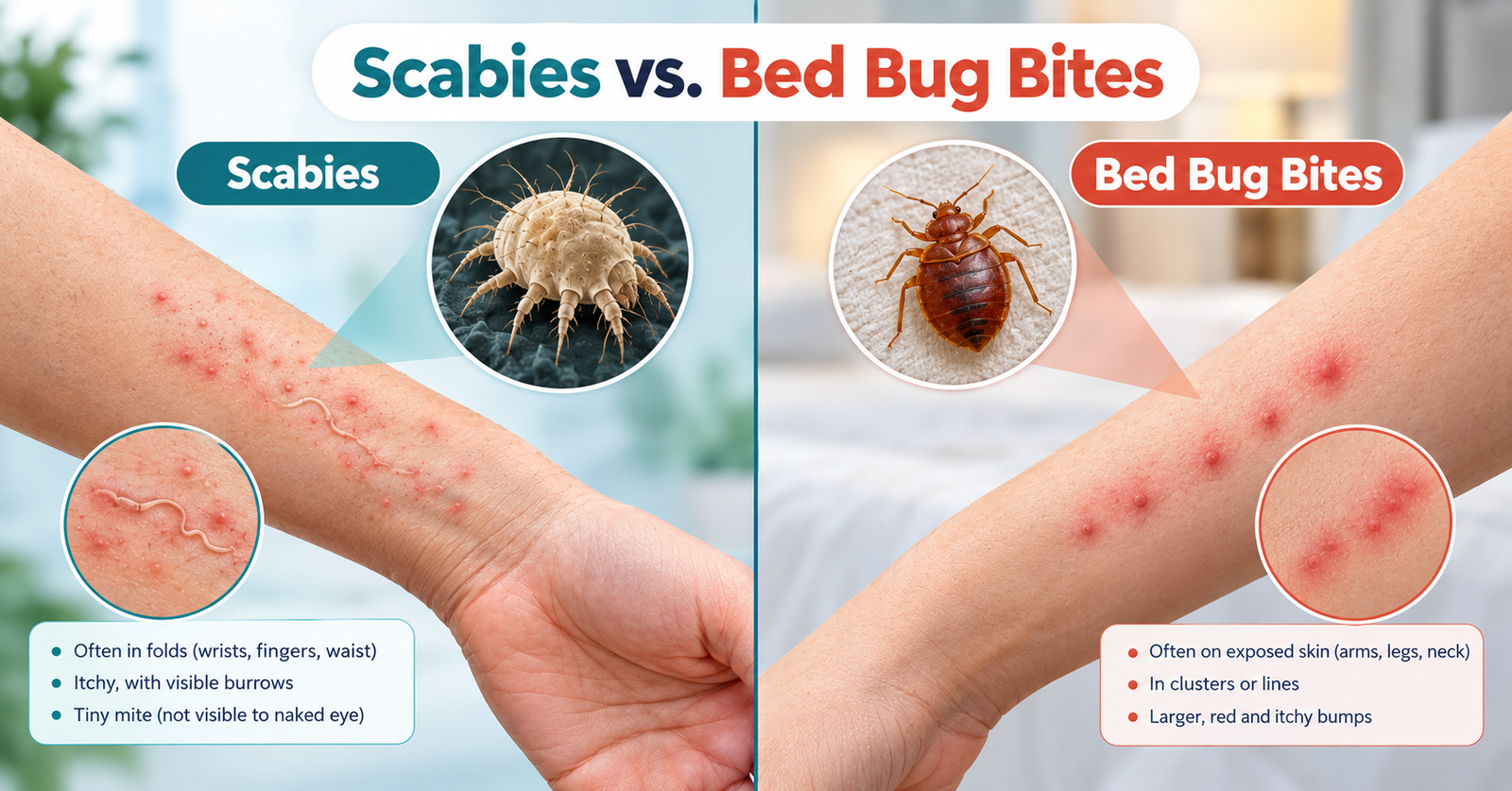
Scabies vs bed bug bites is one of the most common skin puzzles: both cause itchy red bumps, but they have different causes and need completely different treatment. Waking up with an unexplained rash is stressful, especially when you can’t tell whether a mite in your skin or a bug in your mattress is to blame. This guide explains how to tell them apart, what to do about each, and when to see a doctor.
This guide explains how to tell them apart, what to do about each, and when to get medical advice.
What Is Scabies?
Scabies is a skin infestation caused by the microscopic mite Sarcoptes scabiei. The female mite burrows into the top layer of your skin to lay eggs. The intense itching comes from an allergic reaction to the mites, their eggs and their waste.
Scabies spreads mainly through prolonged skin-to-skin contact, such as living with an infected person or sharing a bed. It can occasionally spread through shared bedding or clothing. It is not a sign of poor hygiene and can affect anyone.
For a deeper look, read our full guide: Scabies: Symptoms, Causes, and How Ivermectin Treats It.
What Are Bedbug Bites?
Bedbugs (Cimex lectularius) are small, reddish-brown insects that hide in mattress seams, bed frames, headboards and furniture during the day. They come out at night to feed on exposed skin while you sleep.
Bedbugs don’t live on your body and aren’t known to transmit disease, but their bites can itch badly and cause sleep loss and anxiety.
Scabies vs. Bedbug Bites: Key Differences
| Feature | Scabies | Bedbug Bites |
|---|---|---|
| Cause | Mites burrowing under the skin | Insects feeding on blood at night |
| Itch pattern | Intense, often worse at night | Itchy, but varies; may be mild |
| Where on the body | Finger webs, wrists, elbows, waistline, armpits, groin, buttocks | Exposed areas: face, neck, arms, hands, legs |
| Appearance | Tiny red bumps, blisters, and thin wavy “burrow” lines | Red, raised welts, often in lines or clusters of 3 (“breakfast, lunch, dinner”) |
| Onset | Symptoms can take 2–6 weeks to appear after first exposure | Bites usually appear within hours to a couple of days |
| Spread | Person-to-person skin contact | From infested beds, furniture and luggage |
| Others affected? | Household members and close contacts often itch too | Anyone sleeping in the same infested bed may be bitten |
| Evidence in the home | None | Blood spots on sheets, dark specks (droppings), shed skins, live bugs |
Scabies Symptoms to Watch For
- Severe itching, especially at night
- A pimple-like rash or tiny blisters
- Thin, wavy, grayish or skin-colored burrow tracks
- Sores from scratching, which can become infected
- Rash in skin folds: between fingers, wrists, elbows, belt line, genitals
- In infants, rash can also appear on the scalp, face, palms and soles
If your symptoms match, our Scabies Symptoms, Causes, Treatment & Recovery Guide walks through what to expect day by day.
Bedbug Bite Symptoms to Watch For
- Red, itchy welts that appear after sleeping
- Bites in a line or tight cluster
- Bites mostly on skin exposed during sleep
- Small blood stains on sheets or pillowcases
- A sweet, musty odor in heavily infested rooms
Some people don’t react to bedbug bites at all, so lack of bites doesn’t rule out an infestation.
How to Tell Them Apart at Home
- Check the location. Bites between the fingers or around the waistline point toward scabies. Bites on exposed areas such as arms, neck and face point toward bedbugs.
- Look for burrows. Thin, wavy lines on the skin are a classic sign of scabies.
- Inspect your bed. Check mattress seams, the headboard and bed frame for live bugs, dark specks or rusty stains. Finding them confirms bedbugs.
- Ask who else is itching. If several people in close physical contact itch, scabies is more likely. If everyone who shares a bed or room is bitten, think bedbugs.
- Note the timing. Itching that has built up over weeks suggests scabies. Fresh bites after a trip or a new used-furniture purchase suggest bedbugs.
Only a healthcare professional can confirm a diagnosis, often by examining the skin or taking a skin scraping. Other conditions, like eczema, allergic reactions, fleas and mosquito bites, can look similar.
Treatment for Scabies
Scabies does not clear up on its own and requires treatment to kill the mites. Typical options include:
- Topical creams: Permethrin 5% cream is commonly used first-line treatment. Ivermectin 1% cream is another topical option, used in some regions.
- Oral ivermectin: Often prescribed for widespread cases, crusted scabies, or when topical treatment isn’t practical. It is usually given as a dose based on body weight, and a second dose is often given about 1–2 weeks later.
- Treat contacts at the same time: Household members and close contacts should be treated even if they have no symptoms.
- Wash and bag: Wash bedding, towels and clothing used in the past 3 days in hot water and dry on high heat. Items that can’t be washed can be sealed in a bag for at least 72 hours.
Itching can continue for 2–4 weeks after successful treatment because the skin is still reacting to dead mites. This doesn’t necessarily mean treatment failed.
Explore ivermectin options from our store:
IVERJOHN-3 Ivermectin 3 mg | IVERJOHN-6 Ivermectin 6 mg | IVERJOHN-12 Ivermectin 12 mg | Ivermectin Cream 1% (IVREA)
Treatment for Bedbug Bites
Bedbug bites usually heal on their own within 1–2 weeks. To relieve symptoms:
- Wash the area with soap and water
- Apply a corticosteroid cream or calamine lotion
- Take an oral antihistamine for itching
- Avoid scratching to prevent infection
Ivermectin and other scabies treatments do not work on bedbugs, because they are an insect problem, not a skin infestation. The real fix is eliminating the bugs:
- Wash and heat-dry bedding and clothes on high
- Vacuum mattresses, seams, and furniture thoroughly
- Use mattress and box spring encasements
- Reduce clutter where bugs can hide
- Call a licensed pest control professional, since DIY methods rarely clear a full infestation
When to See a Doctor
Seek medical advice if:
- You can’t tell whether it’s scabies, bedbugs or something else
- Itching is severe or has lasted more than 2 weeks
- Sores are red, swollen, warm, draining pus, or you have a fever (possible infection)
- The patient is a baby, pregnant, elderly or has a weakened immune system
- Over-the-counter remedies haven’t helped
- Multiple family members are affected
Common Mistakes to Avoid
- Treating for the wrong problem. Scabies cream won’t kill bedbugs, and pest control won’t cure scabies.
- Skipping contacts. Untreated household members cause reinfection.
- Stopping early. Complete the full course, including any repeat dose.
- Assuming it’s your hygiene. Neither condition is caused by being dirty.
Frequently Asked Questions
Can scabies be mistaken for bedbug bites?
Yes. Both cause itchy red bumps. Location, burrow lines, who is affected and evidence in the bed help distinguish them.
Do bedbugs cause scabies?
No. They are unrelated. Scabies is caused by mites that spread through skin contact, not by bedbugs.
Can you have both at once?
It’s possible, though uncommon. A clinician can help sort out what’s causing which symptoms.
How long does scabies last without treatment?
It does not go away on its own and can last for months, spreading to others in the meantime.
Does ivermectin treat bedbug bites?
No. Ivermectin treats parasitic infestations such as scabies, not bedbug bites or infestations.
Final Thoughts
Intense itching, wavy burrow lines and itching in finger webs and skin folds point toward scabies. Bites on exposed skin in lines or clusters, with stains or specks on your bedding, point toward bedbugs. Getting the right answer early means you can treat the actual problem and stop it from spreading.
Need Help Choosing a Scabies Treatment?
If a healthcare provider has diagnosed scabies and recommended ivermectin, you can browse our ivermectin tablets and creams in the shop. Want delivery on a deadline? Check our next-day delivery options, or contact our team with questions about orders.
Related reading:
- Scabies: Symptoms, Causes, and How Ivermectin Treats It
- Scabies Symptoms, Causes, Treatment & Recovery Guide
- Ivermectin for Parasitic Worm Infections: Uses, Dosage, and What to Expect
Disclaimer: This article is for educational purposes only and is not a substitute for professional medical advice, diagnosis or treatment. Always consult a qualified healthcare provider before starting any medication.


Leave a comment