


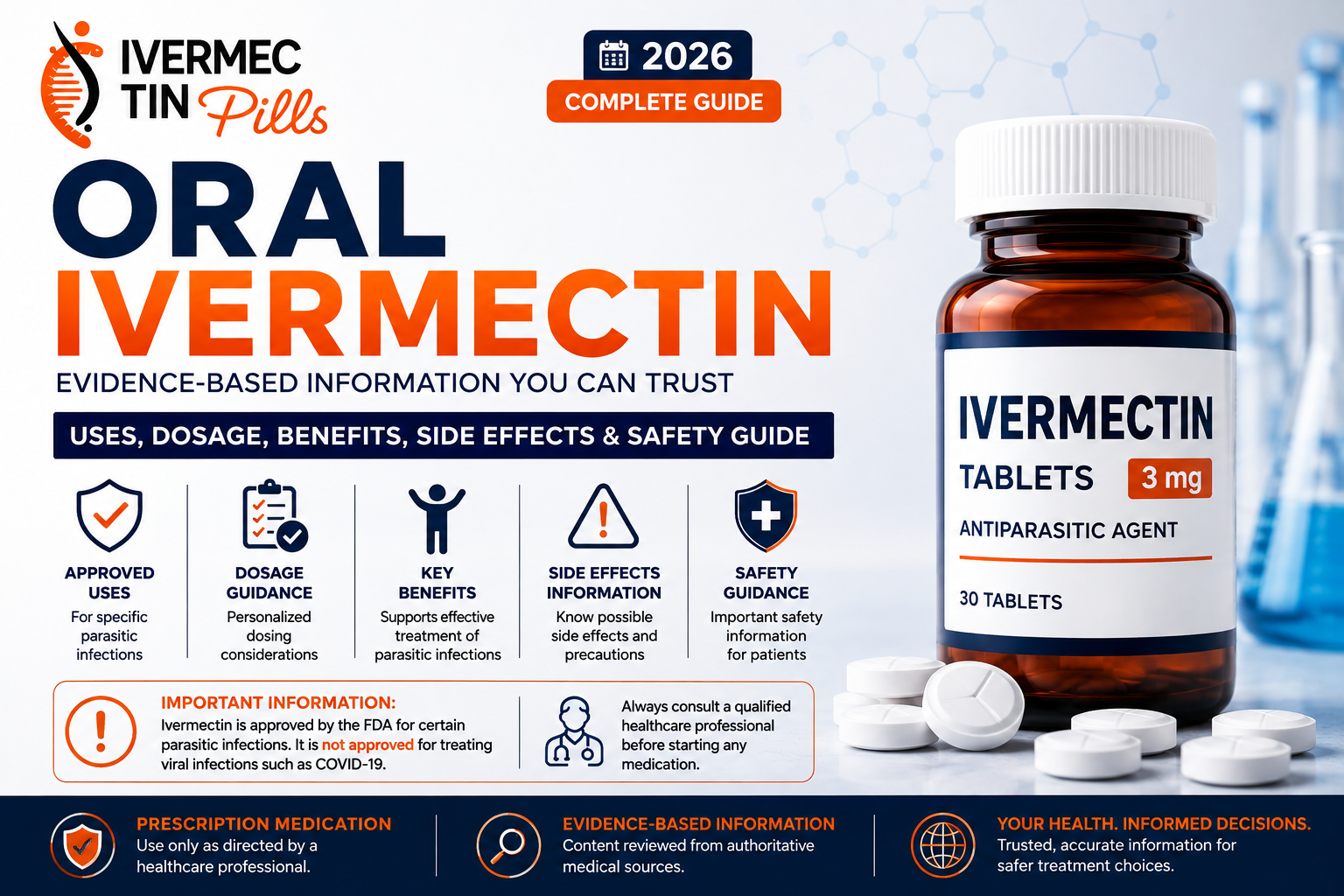
Oral Ivermectin: Approved Uses, Dosage Considerations, Side Effects & Safety Guide (2026)
What Is Oral Ivermectin?
Oral ivermectin is a prescription antiparasitic medication used to treat specific parasitic infections. Since its introduction, it has been prescribed worldwide for certain conditions when a healthcare professional determines it is appropriate. When used according to approved prescribing information and medical guidance, oral ivermectin has an established safety profile for its indicated uses.
This article is intended for educational purposes only. It does not replace advice from a qualified healthcare professional.
How Oral Ivermectin Works
Oral ivermectin works by affecting the nerve and muscle function of susceptible parasites. This action causes paralysis and death of the parasites, allowing the body to eliminate the infection over time. Its effects are specific to certain parasites and should not be assumed to apply to conditions for which it has not been prescribed.
Approved Medical Uses
Depending on the country and regulatory authority, oral ivermectin may be prescribed for conditions such as:
- Strongyloidiasis (intestinal roundworm infection)
- Onchocerciasis (river blindness)
- Certain cases of scabies when recommended by a healthcare professional
- Other parasitic infections where approved or clinically appropriate
Approved indications vary by country, so patients should follow the prescribing information applicable in their location.
Approved Uses vs. Off-Label Prescribing
Healthcare professionals may sometimes prescribe medications for uses outside their approved labeling when supported by clinical judgment and applicable regulations. Whether a particular use is appropriate depends on the patient’s diagnosis, medical history, available evidence, and local standards of care. Patients should only take oral ivermectin for conditions evaluated by a qualified healthcare professional.
How Healthcare Professionals Determine Dosage
The appropriate dosage is individualized and may depend on factors including:
- Body weight
- The specific infection being treated
- Age
- Liver function
- Overall health
- Other medications
- Clinical response to treatment
Patients should never change their prescribed dose or duration without consulting the prescribing clinician.
How to Take Oral Ivermectin Safely
For safe use:
- Take the medication exactly as prescribed.
- Follow the instructions on the prescription label.
- Do not take extra doses or stop treatment early unless advised.
- If you miss a dose, contact your healthcare professional or pharmacist for guidance.
- Keep all follow-up appointments if monitoring is recommended.
Possible Side Effects
Like all prescription medicines, oral ivermectin can cause side effects. Many are mild and temporary.
Common side effects may include:
- Headache
- Dizziness
- Nausea
- Diarrhea
- Fatigue
- Mild skin rash
Some reactions may occur as the body responds to dying parasites rather than the medication itself.
Serious Side Effects
Although uncommon, seek immediate medical attention if symptoms such as the following occur:
- Difficulty breathing
- Swelling of the face, lips, tongue, or throat
- Severe skin reactions
- Confusion
- Persistent vomiting
- Vision changes
- Seizures
Drug Interactions
Oral ivermectin may interact with certain medications. Before starting treatment, inform your healthcare professional about:
- Prescription medicines
- Over-the-counter medications
- Herbal supplements
- Vitamins
Providing a complete medication list helps reduce the risk of harmful interactions.
Precautions and Contraindications
Healthcare professionals may recommend additional evaluation before prescribing oral ivermectin for individuals who:
- Have liver disease
- Have a history of allergic reactions to ivermectin
- Are taking multiple medications
- Have certain neurological conditions
- Are pregnant or breastfeeding
- Have significant underlying medical conditions
Treatment decisions should always be individualized.
Pregnancy and Breastfeeding
People who are pregnant, planning pregnancy, or breastfeeding should discuss treatment options with their healthcare professional. The potential benefits and risks should be carefully evaluated before treatment begins.
Storage Information
Store oral ivermectin according to the product labeling.
General recommendations include:
- Keep at the recommended storage temperature.
- Protect from excessive moisture and heat.
- Store out of reach of children.
- Do not use expired medication.
When to Contact a Healthcare Professional
Contact your healthcare professional if:
- Symptoms do not improve as expected.
- New or worsening symptoms develop.
- You experience troublesome side effects.
- You believe you may be having an allergic reaction.
- You have questions about your treatment plan.
Frequently Asked Questions
Is oral ivermectin an antibiotic?
No. It is an antiparasitic medication.
Can everyone take oral ivermectin?
No. Whether it is appropriate depends on the individual’s diagnosis, health status, and medical history.
Can oral ivermectin cause side effects?
Yes. Most side effects are mild, but serious reactions are possible and require prompt medical attention.
Can oral ivermectin be taken with other medications?
Some medicines may interact with oral ivermectin. Discuss all medications and supplements with your healthcare professional before treatment.
What should I do if I miss a dose?
Follow the instructions provided with your prescription or contact your healthcare professional or pharmacist for advice.
Key Takeaways
Oral ivermectin is an established prescription antiparasitic medication with important clinical uses for certain parasitic infections. Healthcare professionals determine whether it is appropriate based on the patient’s diagnosis, medical history, and current health status. Patients should use oral ivermectin only as prescribed and discuss any concerns about treatment, side effects, or possible drug interactions with their healthcare provider.
Disclaimer: The information on this website is provided for educational purposes only and is not a substitute for professional medical advice, diagnosis, or treatment. Always consult a qualified healthcare professional regarding any medical condition or medication.


