


Scabies: Symptoms, Causes, and How Ivermectin Treats It
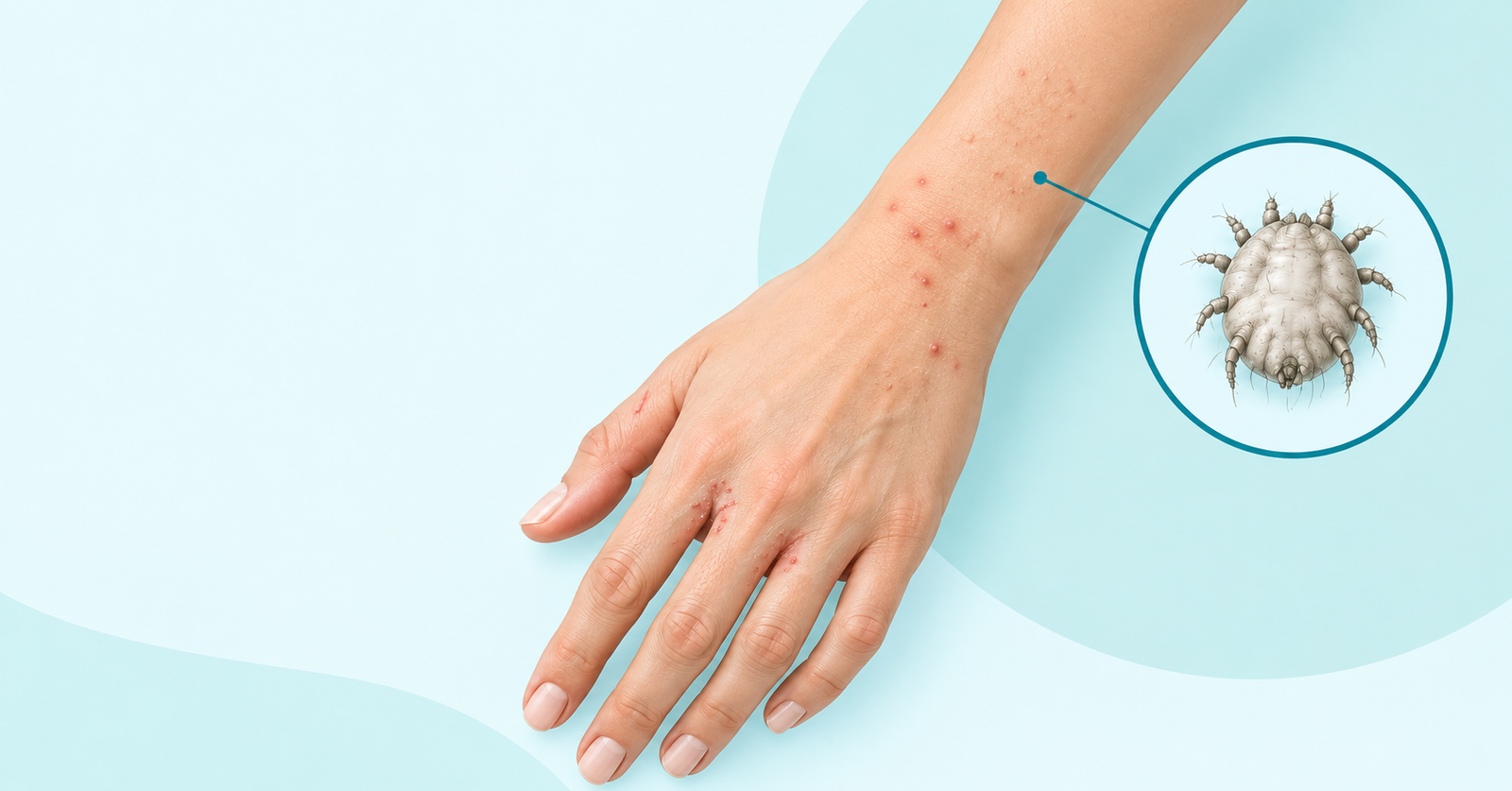
Scabies symptoms include intense itching that is worse at night, a pimple-like rash, and thin burrow lines on the skin. Scabies is a contagious skin infestation caused by the mite Sarcoptes scabiei. It does not clear on its own. Prescription treatment, either permethrin 5% cream or oral ivermectin, kills the mites, and a repeat treatment is usually needed. All close contacts should be treated at the same time. Itching can last 2 to 4 weeks after the mites are gone.
In this guide:
- What scabies is and how the mite lives
- How scabies spreads
- Symptoms, including in babies and older adults
- Types of scabies
- Diagnosis and conditions it is confused with
- Treatment options compared
- How ivermectin works and who can use it
- Cleaning your home
- Complications, FAQs, and when to see a doctor
What Is Scabies?
Scabies is a skin infestation caused by a microscopic mite, Sarcoptes scabiei var. hominis. The mite is too small to see clearly with the naked eye, measuring about 0.3 to 0.5 mm.
The Life Cycle of the Scabies Mite
Understanding the life cycle explains why treatment is usually repeated:
- Mating. Mites mate on the skin surface. The male dies soon afterward.
- Burrowing. The fertilized female digs a tunnel into the outer layer of skin and lays 2 to 3 eggs per day over her life of about 1 to 2 months.
- Hatching. Eggs hatch in roughly 3 to 4 days into larvae, which move to the skin surface or stay in the burrow.
- Maturing. Larvae develop into nymphs and then adults over about 10 to 14 days, and the cycle repeats.
The itching and rash are not caused by the mite biting. They are an allergic-type reaction to the mites, their eggs, and their waste. This is why symptoms are delayed after a first infestation, and why itching can linger after the mites are dead.
Most infested people carry only about 10 to 15 adult mites at a time. In crusted scabies (covered below), the number can reach thousands or millions.
How Does Scabies Spread?
Scabies spreads mainly through prolonged, direct skin-to-skin contact with someone who has it. A quick handshake or brief hug is unlikely to spread it. It is most often transmitted:
- Between household members and sleeping partners
- Through sexual contact (scabies is sometimes classed as a sexually transmitted infection in adults, though it also spreads in non-sexual ways)
- In crowded or institutional settings, such as nursing homes, long-term care facilities, childcare centers, hospitals, prisons, and shelters
- Less commonly, through sharing bedding, towels, or clothing, which matters mainly with crusted scabies
Common myths:
- “Scabies means poor hygiene.” It does not. Anyone can get it, regardless of cleanliness or income.
- “My pet gave it to me.” Pets get their own mite species (the cause of mange), which does not complete its life cycle on humans. Contact with an infested animal can cause brief itching but not a true human infestation.
- “Mites jump or fly.” They crawl, and cannot jump.
Away from human skin, scabies mites usually survive only about 2 to 3 days, which is why washing and bagging items for 72 hours is effective.
Who Is at Higher Risk?
- Children and young adults, who have frequent close contact
- People living in crowded conditions
- Residents and staff of care facilities
- Older adults and people with weakened immune systems (higher risk of crusted scabies)
- Sexual partners of someone with scabies
Symptoms of Scabies
The Main Signs
- Intense itching, typically worse at night or after a warm shower
- A pimple-like rash, with small red bumps, sometimes blisters
- Burrows: thin, wavy, raised lines (grayish-white or skin-colored), often a few millimeters long
- Scratch marks and sores, which can become infected
Where It Appears
In older children and adults, scabies tends to occur in warm skin folds and thin skin:
- Between the fingers and on the wrists
- Elbows and armpits
- Waistline, belt line, and buttocks
- Genitals (itchy bumps on the penis are a classic sign)
- Around the nipples and under the breasts
- Shoulder blades and ankles
The face and scalp are usually spared in older children and adults.
Scabies in Babies and Young Children
Infants and toddlers may show scabies on the head, face, neck, palms, and soles of the feet, and can develop blisters or pustules in these areas. They may be fussy, sleep badly, and scratch or rub constantly. Because it can resemble eczema, it is often missed at first.
Scabies in Older Adults
In older adults, especially those in care homes, the rash may be subtle or mistaken for dry skin, eczema, or a drug reaction. The back is often affected. Because symptoms can be vague, outbreaks in facilities can go unnoticed for a while.
How Soon Do Symptoms Appear?
- First-time infestation: typically 2 to 6 weeks after exposure
- Previous scabies: often within 1 to 4 days, because the immune system recognizes the mite quickly
Importantly, a person can pass on scabies before they have any symptoms. That is why close contacts are treated at the same time as the patient.
Types of Scabies
| Type | Key features | Contagiousness |
|---|---|---|
| Classic scabies | Itching, small rash, burrows, relatively few mites | Contagious through prolonged skin contact |
| Crusted (Norwegian) scabies | Thick, scaly crusts on hands, feet, elbows, scalp; may itch only mildly; thousands of mites | Highly contagious, including through brief contact and contaminated items |
| Nodular scabies | Firm, itchy, reddish-brown lumps, often on the groin, genitals, and armpits; can persist for weeks after treatment | Lumps are a reaction and are not usually infectious |
| Scabies in infants | Blisters and pustules on palms, soles, face, and scalp | Contagious |
Crusted (Norwegian) Scabies
This severe form is seen more often in people with weakened immune systems (for example from HIV, organ transplant, or immunosuppressive medicines), older adults, and people with certain neurological or developmental conditions. Because the person may not scratch or feel much itch, it can go undetected for a long time. It requires prompt medical care, usually combined oral and topical treatment, and strict infection-control measures in care settings.
How Is Scabies Diagnosed?
A healthcare provider will usually diagnose scabies by:
- Asking about symptoms, such as nighttime itching, and whether others at home are itchy
- Examining the skin, looking for burrows and the typical distribution of the rash
- Skin scraping or dermoscopy (optional): a small skin sample or magnified skin exam to find mites, eggs, or waste under a microscope
Finding a mite confirms the diagnosis, but a negative scraping does not rule scabies out, since there may be few mites. Doctors often diagnose and treat based on clinical findings alone.
Conditions Often Mistaken for Scabies
- Eczema (atopic dermatitis)
- Allergic contact dermatitis
- Bed bug, flea, or mosquito bites
- Folliculitis
- Dermatitis herpetiformis
- Drug rashes
- Hives
Because treatment is a prescription medicine, don’t self-diagnose. Itching without a proper diagnosis can have many causes.
Scabies Treatment Options
Scabies requires prescription medication. Moisturizers, tea tree oil, and other home remedies do not reliably kill mites.
| Treatment | How it is used | Typical notes |
|---|---|---|
| Permethrin 5% cream | Applied from the neck down to all skin, left on for 8 to 14 hours, then washed off; usually repeated after 1 to 2 weeks | Common first-line option; generally used in infants over 2 months and in pregnancy |
| Oral ivermectin | Tablets taken by mouth as prescribed, usually repeated after 1 to 2 weeks | Convenient; used for outbreaks, difficult-to-treat cases, and crusted scabies |
| Benzyl benzoate lotion | Applied topically in some regions | Can irritate skin |
| Sulfur ointment | Applied topically for several days | Sometimes used in infants and pregnancy where other options are not suitable |
| Spinosad or other topicals | Approved or used in certain countries | Availability varies |
Your healthcare provider will choose based on your age, health, pregnancy status, the severity of infestation, and what is available locally.
How Ivermectin Treats Scabies
How It Works
Ivermectin is an antiparasitic medicine. It binds to certain channels in the nerve and muscle cells of invertebrates such as mites, causing paralysis and death. It acts on the mites but, at proper doses, does not affect human nerve cells in the same way.
Dosing and Timing
Oral ivermectin for scabies is dosed by body weight (guidance commonly cites about 200 micrograms per kilogram) and is usually repeated after 1 to 2 weeks. The repeat dose matters because ivermectin kills active mites but may not kill all unhatched eggs. Crusted scabies often requires several doses over a longer period. Taking the tablets with food may improve absorption. Your doctor will give you the exact dose and schedule, and you should never adjust them yourself.
Regulatory Status
In the United States, oral ivermectin is FDA-approved for strongyloidiasis of the intestinal tract and onchocerciasis. Use for scabies is off-label in the U.S., though it is recommended in CDC and WHO guidance and is formally approved for scabies in a number of other countries. Always check the regulatory position where you live.
Advantages of Oral Ivermectin
- Easier than applying cream to the whole body, especially for children, older adults, and people with limited mobility
- Useful for treating many people quickly in outbreaks
- Suited to people who cannot tolerate topical products
- Often part of treatment for crusted scabies
Who Should Not Take Ivermectin Without Medical Advice
- Pregnant or breastfeeding women. Safety data are limited, so alternatives are usually preferred.
- Children under 15 kg (about 33 lb). Safety is not well established in this weight group.
- People taking certain medicines, such as warfarin (blood thinner), since ivermectin may affect clotting values. Tell your provider about everything you take.
- People with liver disease or a prior reaction to ivermectin.
- People who have lived in parts of Central Africa where Loa loa infection occurs. Ivermectin can cause serious reactions in people with very heavy Loa loa infection, so tell your doctor about travel and residence history.
Possible Side Effects
Most people tolerate ivermectin well. Possible effects include:
- Nausea or diarrhea
- Dizziness
- Headache
- Tiredness
- Temporary worsening of itching or rash, partly due to the body’s reaction to dying mites
Seek urgent medical care for swelling of the face or throat, trouble breathing, severe skin reactions, confusion, or fainting.
Human vs. Veterinary Ivermectin
Never use products made for animals. Their concentrations and ingredients differ, and taking them can cause serious harm, including overdose. Use only human-grade medication prescribed to you and supplied by a licensed pharmacy.
Treating Your Home and Household
Treatment succeeds best when everyone is treated at once and the environment is handled sensibly.
- Treat all household members and close contacts at the same time, even if they have no symptoms.
- Wash in hot water (at least 50°C / 122°F) all bedding, towels, and clothing worn or used in the 3 days before treatment, then dry on high heat for at least 10 to 30 minutes.
- Bag items that cannot be washed, such as certain clothing, stuffed toys, or shoes, in a sealed plastic bag for at least 72 hours.
- Vacuum carpets and upholstered furniture. Insecticide sprays and fumigation are not necessary and may be harmful.
- Keep nails short to limit skin damage from scratching.
Why Am I Still Itching After Treatment?
This is one of the most common concerns. Itching and a rash can continue for 2 to 4 weeks after successful treatment, because the skin is still reacting to dead mites and their remains. It does not necessarily mean treatment has failed.
Contact your doctor if:
- New burrows or new rash areas appear
- Itching is getting worse rather than gradually improving after 4 weeks
- You were not able to complete the repeat dose, or a household contact was not treated
A doctor can recommend soothing measures such as antihistamines (which may also help with sleep), emollients, or a short course of mild topical steroid for stubborn itching. Nodules can persist for weeks to months and may need specific treatment.
Possible Complications
- Secondary bacterial skin infection (impetigo or cellulitis) from scratching, with signs like pus, crusting, warmth, spreading redness, or fever
- Poor sleep and distress, which can affect school, work, and mental wellbeing
- Post-infectious complications: in rare cases, infections caused by group A streptococcus can lead to kidney inflammation, which is why treating skin infections matters, particularly in communities with high scabies rates
Preventing Reinfestation
- Finish the full course, including any repeat dose
- Treat every close contact simultaneously
- Avoid close skin contact until your doctor confirms treatment is complete
- Launder and dry bedding and clothing as described above
- If you live or work in a care facility, follow outbreak control guidance, which may include isolating affected people and treating staff and visitors where needed
When to See a Doctor
Seek medical advice if you have:
- Persistent itching, especially at night, or a rash that isn’t improving
- Several household members with similar itching
- Signs of infection, such as pus, spreading redness, or fever
- Thick, crusted skin patches
- A weakened immune system
- Scabies in an infant, a pregnant or breastfeeding woman, or an older adult
- Itching that continues beyond 4 weeks after treatment
Frequently Asked Questions
Can scabies go away on its own?
No. The mites continue to live and lay eggs, so treatment is needed.
How long is scabies contagious?
A person can be contagious from before symptoms appear until the mites are killed by treatment. Guidance generally says people can return to school or work after the first effective treatment course has been completed, though your provider will advise you.
Can I get scabies from my dog or cat?
Not true human scabies. Animal mites can cause temporary itching on people but do not reproduce on human skin.
Is ivermectin better than permethrin?
Both are effective. Permethrin cream is typically first-line, while ivermectin is chosen for convenience, treatment failures, outbreaks, and crusted scabies. Resistance to either has been reported in some areas.
Can I buy ivermectin without a prescription?
Ivermectin for scabies should be used under medical supervision. Obtain it only from a licensed pharmacy with a valid prescription.
Can scabies come back?
Yes, if mites are not fully eliminated, if treatment is incomplete, or if you are re-exposed to an untreated contact.
How long does it take for ivermectin to work?
Ivermectin begins to kill mites within a day or so, but itching can take 2 to 4 weeks to fully settle.
Do I need to throw away my mattress or furniture?
No. Washing, bagging, and vacuuming are sufficient.
Can scabies spread through clothes or swimming pools?
Spread through clothing and bedding is uncommon in classic scabies, and pools are not a typical source.
Key Takeaways
- Scabies is caused by a microscopic mite and spreads mainly through prolonged skin-to-skin contact.
- Severe nighttime itching and a rash with burrows are typical, but babies and older adults may look different.
- Prescription treatments, including permethrin cream and oral ivermectin, are effective, and repeat dosing is usually needed.
- Treat all close contacts at the same time, and wash or bag bedding and clothing.
- Itching can persist for several weeks after successful treatment.
- Always use human-grade medication prescribed by a healthcare professional.
[Ready to get started? Add to Cart]


Leave a comment