


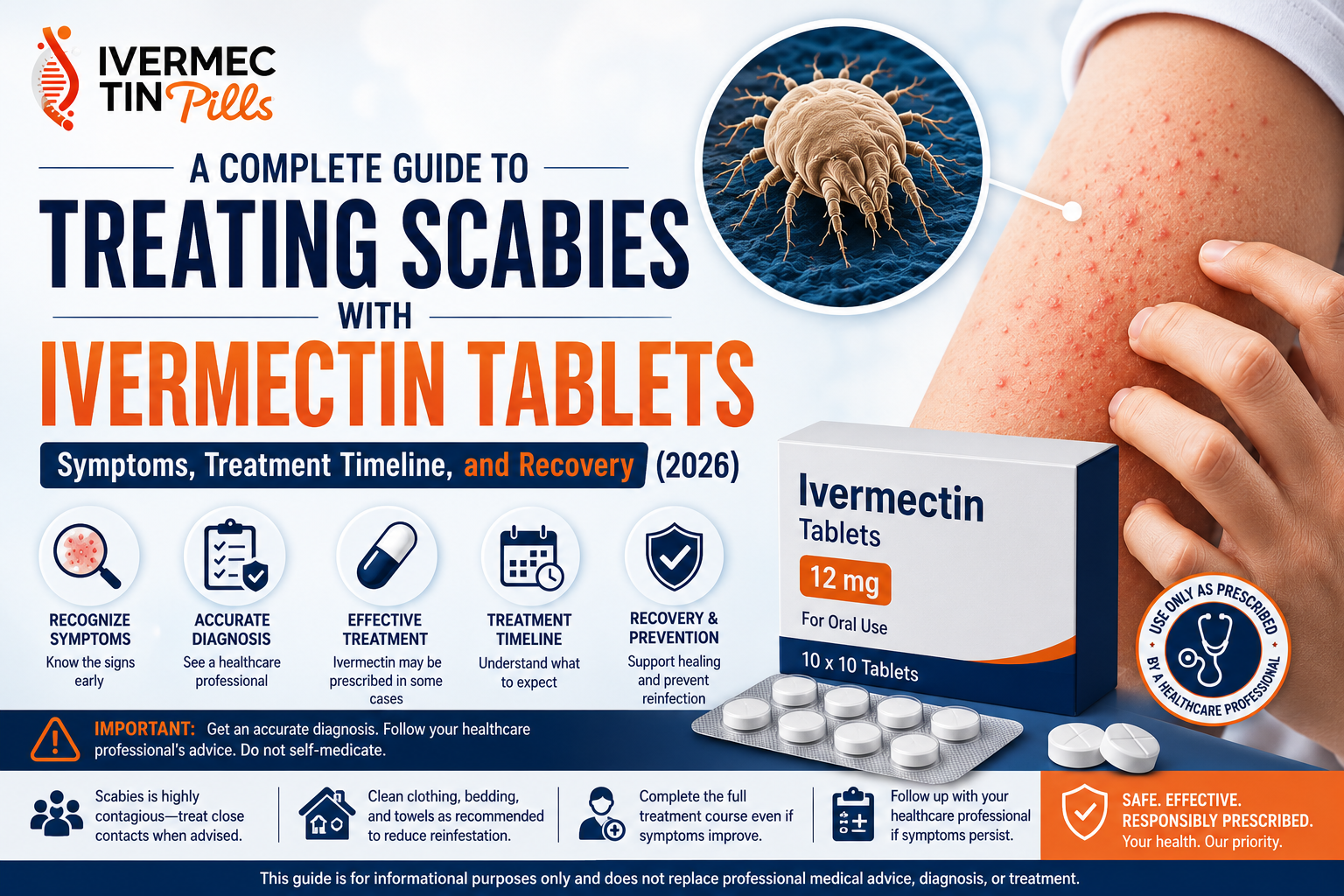
A Complete Guide to Treating Scabies With Ivermectin Tablets: Symptoms, Treatment Timeline, and Recovery (2026)
Ivermectin for scabies is one treatment option that healthcare professionals may prescribe for certain patients, depending on the individual’s condition, medical history, and applicable clinical guidelines. Scabies is a common, highly contagious skin condition caused by the microscopic mite Sarcoptes scabiei. These mites burrow into the outer layer of the skin, leading to intense itching, irritation, and a rash that often becomes more noticeable at night. Early diagnosis and appropriate treatment are important to relieve symptoms, reduce the risk of complications, and help prevent the infestation from spreading to others.
Although scabies can affect anyone, it is more common in households, nursing homes, childcare facilities, dormitories, and other settings where prolonged skin-to-skin contact occurs. Because the condition spreads easily among close contacts, timely diagnosis and appropriate treatment are essential. When left untreated, scabies can continue spreading to family members, caregivers, and others in the community.
One treatment option that healthcare professionals may prescribe in certain situations is oral ivermectin. Depending on the patient’s condition, medical history, age, and local treatment guidelines, ivermectin may be used instead of—or alongside—topical medications. The choice of treatment is based on an individual clinical assessment and should always follow the advice of a qualified healthcare professional.
This guide explains how scabies develops, the most common signs and symptoms, how healthcare professionals diagnose the condition, when ivermectin for scabies may be considered as part of a treatment plan, what recovery typically looks like, and practical steps to help reduce the risk of reinfestation.
What Is Scabies?
Scabies is an infestation caused by tiny mites that burrow into the skin to lay eggs. The body’s immune response to the mites and their waste products causes severe itching and an itchy rash.
Scabies spreads primarily through prolonged skin-to-skin contact. Less commonly, it may spread through shared bedding, clothing, or towels, particularly in cases of crusted scabies.
Anyone can develop scabies regardless of age or personal hygiene.
Common Symptoms of Scabies
Symptoms usually appear several weeks after the initial infestation, although people who have had scabies before may notice symptoms much sooner.
Common symptoms include:
- Intense itching, especially at night
- Small red bumps or rash
- Thin, wavy burrow lines on the skin
- Blisters or sores from scratching
- Skin irritation between fingers, wrists, elbows, waistline, buttocks, ankles, or genital area
Children may also develop symptoms on the scalp, face, palms, and soles.
How Healthcare Professionals Diagnose Scabies
Diagnosis typically involves:
- Reviewing symptoms
- Examining the skin
- Looking for characteristic burrows
- Using dermoscopy when appropriate
- Occasionally obtaining a skin scraping to identify mites, eggs, or fecal material
Early diagnosis helps reduce ongoing transmission and supports timely treatment.
What Is Ivermectin?
Ivermectin is an antiparasitic medicine used to treat certain parasitic infections. It works by interfering with the nervous system of susceptible parasites, leading to their elimination.
For scabies, healthcare professionals may prescribe oral ivermectin in situations where it is clinically appropriate, taking into account the patient’s overall health, age, body weight, and other factors.
Treatment decisions should always be made by a qualified healthcare professional.
When Might Oral Ivermectin Be Considered?
Depending on individual circumstances and local clinical guidance, oral ivermectin may be considered for patients who:
- Have widespread scabies
- Have crusted (Norwegian) scabies
- Cannot tolerate or appropriately use topical treatment
- Are part of an institutional outbreak
- Have persistent infestation after appropriate evaluation
Not every person with scabies requires oral treatment.
How Treatment Is Planned
Healthcare professionals determine treatment based on several factors, including:
- Body weight
- Medical history
- Current medications
- Age
- Pregnancy status
- Severity of infestation
Patients should follow their prescribed treatment plan exactly as instructed and should not change the dose or schedule without medical advice.
What to Expect During Recovery
First Week
Treatment begins to eliminate the mites, but itching often continues. Persistent itching during the first few weeks does not necessarily mean treatment has failed.
Weeks Two to Four
Most people notice gradual improvement in itching and healing of the skin. Existing bumps and irritation continue to resolve over time.
After Four Weeks
If symptoms continue, worsen, or new burrows appear, follow-up with a healthcare professional is recommended to determine whether additional evaluation or treatment is needed.
Preventing Reinfestation
Successful treatment includes environmental measures as advised by a healthcare professional, such as:
- Washing recently used clothing, bedding, and towels according to care instructions.
- Treating close contacts when recommended.
- Vacuuming upholstered furniture and carpets.
- Avoiding close skin contact until treatment recommendations have been followed.
These measures can help reduce the chance of ongoing transmission.
Possible Side Effects
Like all medicines, ivermectin may cause side effects in some people.
Commonly reported effects include:
- Nausea
- Dizziness
- Headache
- Fatigue
- Mild stomach discomfort
Patients should contact a healthcare professional promptly if they experience severe or concerning symptoms.
Frequently Asked Questions
Does the itching stop immediately?
No. Itching may continue for several weeks even after successful treatment because the skin is still reacting to the previous infestation.
Can scabies return?
Yes. A person can become reinfested after successful treatment if they are exposed again.
Should everyone in the household be evaluated?
Because scabies spreads through close contact, healthcare professionals may recommend evaluation or treatment for household members or other close contacts, depending on the situation.
When should I seek medical advice again?
Seek medical advice if symptoms worsen, persist beyond the expected recovery period, signs of infection develop, or you have concerns about your treatment.
Key Takeaways
Scabies is a treatable skin condition, and prompt medical evaluation can help relieve symptoms and reduce the risk of spreading the infestation to others. Ivermectin for scabies may be prescribed in certain clinical situations, but treatment decisions should always be based on an individual’s medical history, overall health, and the judgment of a qualified healthcare professional.
Following the prescribed treatment plan, completing any recommended environmental cleaning measures, treating close contacts when advised, and attending follow-up appointments can support recovery and help reduce the risk of reinfestation. If symptoms persist or worsen after treatment, patients should consult their healthcare provider for further evaluation and guidance.


