


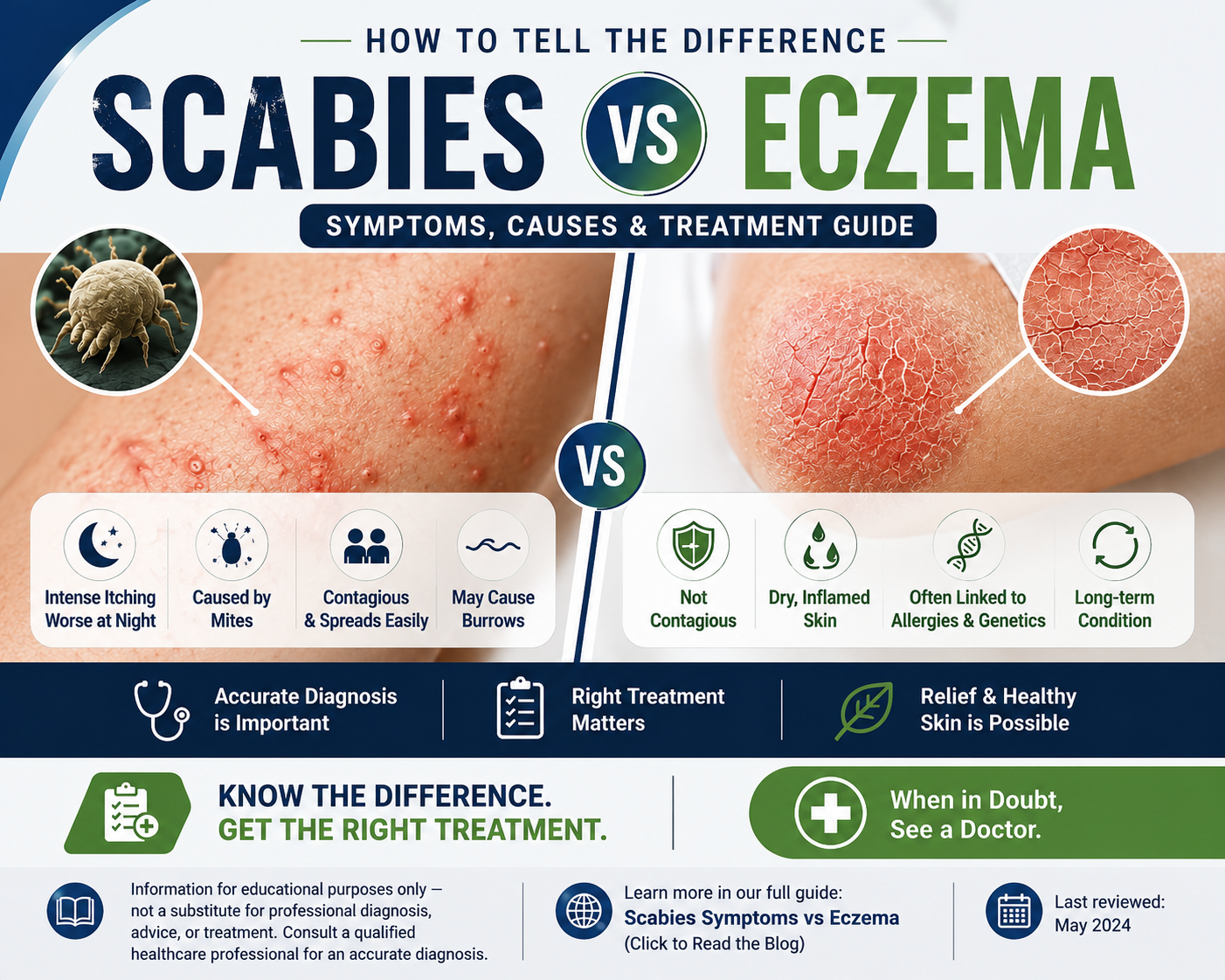
Scabies Symptoms vs Eczema: How to Tell the Difference and When to See a Doctor
Itchy, irritated skin is a common reason people seek medical advice. Two conditions that are frequently confused are scabies and eczema. While both can cause itching, redness, and skin rashes, they have very different causes and require different treatment approaches.
Understanding the difference between scabies symptoms vs eczema can help you recognize when it’s important to seek medical evaluation rather than relying on home remedies or self-diagnosis.
What Is Scabies?
Scabies is a contagious skin infestation caused by the microscopic mite Sarcoptes scabiei. The mites burrow into the outer layer of the skin, where they lay eggs. The body’s immune response to the mites and their waste products causes intense itching and a rash.
Scabies spreads mainly through prolonged skin-to-skin contact. Less commonly, it may spread through shared bedding, towels, or clothing.
What Is Eczema?
Eczema, also known as atopic dermatitis, is a chronic inflammatory skin condition. Unlike scabies, eczema is not contagious.
It is often associated with genetics, allergies, environmental triggers, and a weakened skin barrier. Symptoms tend to come and go over time and vary from person to person.
Scabies Symptoms vs Eczema: Comparison Table
| Feature | Scabies | Eczema |
|---|---|---|
| Cause | Mite infestation | Chronic inflammatory skin condition |
| Contagious | Yes | No |
| Main Symptom | Severe itching, often worse at night | Persistent itching with dry skin |
| Rash Location | Fingers, wrists, waist, groin, feet | Face, neck, elbows, knees, hands |
| Burrow Marks | Often present | Not present |
| Skin Appearance | Small bumps, blisters, burrows | Dry, cracked, thickened patches |
| Spread | Through close contact | Does not spread person-to-person |
Common Symptoms of Scabies
Symptoms may appear several weeks after the first exposure.
Common signs include:
- Severe itching that often worsens at night
- Small red bumps
- Thin, wavy burrow lines on the skin
- Tiny blisters
- Rash between the fingers
- Itching around the wrists, waistline, buttocks, and genital area
- Crusting in severe cases
Frequent scratching can damage the skin and increase the risk of secondary bacterial infection.
Common Symptoms of Eczema
Eczema symptoms may include:
- Dry skin
- Persistent itching
- Red, brown, or inflamed patches
- Thickened skin from repeated scratching
- Cracked skin
- Sensitive skin
- Small fluid-filled blisters during flare-ups
Unlike scabies, eczema usually follows a recurring pattern of flare-ups and periods of improvement.
How to Tell the Difference
Although both conditions can appear similar, several clues may help distinguish them.
Scabies
- Intense nighttime itching
- Rash often begins between the fingers
- Visible burrow marks
- Multiple people in the same household may develop symptoms
- Highly contagious through close contact
Eczema
- Dry, flaky skin
- Triggered by irritants, allergens, weather changes, or stress
- No burrows
- Recurring flare-ups over time
- Not contagious
Because these symptoms can overlap, a healthcare professional should evaluate persistent or worsening rashes.
What Causes Scabies?
Scabies develops after contact with an infected person.
Risk factors include:
- Crowded living conditions
- Nursing homes
- Childcare centers
- Schools
- Shared bedding or clothing
- Close household contact
What Causes Eczema?
Several factors may contribute to eczema, including:
- Family history
- Allergies
- Dust mites
- Dry weather
- Harsh soaps
- Certain fabrics
- Skin irritation
- Emotional stress
How Are These Conditions Diagnosed?
Diagnosing Scabies
A healthcare professional may:
- Examine the rash
- Look for burrow marks
- Perform a skin scraping to identify mites under a microscope
Diagnosing Eczema
Diagnosis may involve:
- Reviewing your medical history
- Physical examination
- Allergy testing when appropriate
- Ruling out other skin conditions
Treatment Options
Treatment depends on the underlying diagnosis.
Scabies
Healthcare professionals may prescribe medications that eliminate the mites. Close contacts may also need evaluation and treatment. Washing bedding, towels, and clothing according to medical advice can help reduce the risk of reinfestation.
Eczema
Treatment focuses on reducing inflammation, relieving itching, and protecting the skin barrier. Depending on the severity, a healthcare professional may recommend moisturizers, trigger avoidance, or prescription medications.
Do not start prescription treatments without guidance from a qualified healthcare professional.
When Should You See a Healthcare Professional?
Seek medical care if you experience:
- Severe itching that does not improve
- A rapidly spreading rash
- Signs of infection, such as pus or fever
- Multiple household members developing similar symptoms
- Difficulty sleeping because of itching
- Uncertainty about whether you have scabies, eczema, or another skin condition
Early evaluation can help ensure appropriate treatment and reduce complications.
Can Scabies Be Mistaken for Eczema?
Yes. Early scabies can resemble eczema because both conditions may cause itchy, inflamed skin. However, scabies is more likely to cause intense nighttime itching, visible burrows, and symptoms affecting close contacts or family members. A healthcare professional can perform the appropriate examination to determine the cause.
Prevention Tips
To Help Reduce the Risk of Scabies
- Avoid prolonged skin-to-skin contact with infected individuals.
- Follow treatment instructions carefully if diagnosed.
- Wash clothing and bedding as recommended by your healthcare professional.
- Ensure close contacts are evaluated if advised.
To Help Manage Eczema
- Moisturize your skin regularly.
- Avoid known irritants and allergens.
- Use gentle, fragrance-free skincare products.
- Take warm rather than hot showers.
- Protect your skin from excessive dryness and manage stress where possible.
Final Thoughts
Although scabies symptoms vs eczema may appear similar at first, they are distinct conditions with different causes, patterns, and treatments. Scabies is caused by microscopic mites and is contagious, while eczema is a chronic inflammatory skin condition that is not contagious.
Because the treatments differ significantly, obtaining an accurate diagnosis from a qualified healthcare professional is important if you have persistent itching, a spreading rash, or symptoms that do not improve.
Frequently Asked Questions
1. Is scabies itchier than eczema?
Scabies often causes intense itching that becomes worse at night, whereas eczema itching varies and is commonly associated with dry, inflamed skin.
2. Can eczema turn into scabies?
No. Eczema and scabies are separate conditions with different causes.
3. Is scabies contagious?
Yes. Scabies spreads primarily through prolonged, close skin-to-skin contact with an infected person.
4. Can I diagnose scabies at home?
No. Many skin conditions can look similar. A healthcare professional should evaluate persistent itching or rashes to determine the correct diagnosis.
5. How long does eczema last?
Eczema is often a long-term condition with periods of flare-ups and remission. Appropriate skin care and medical guidance can help manage symptoms.
Medical Disclaimer: This article is for educational purposes only and should not be used as a substitute for professional medical advice, diagnosis, or treatment. If you have concerns about a skin condition, consult a qualified healthcare professional.


