


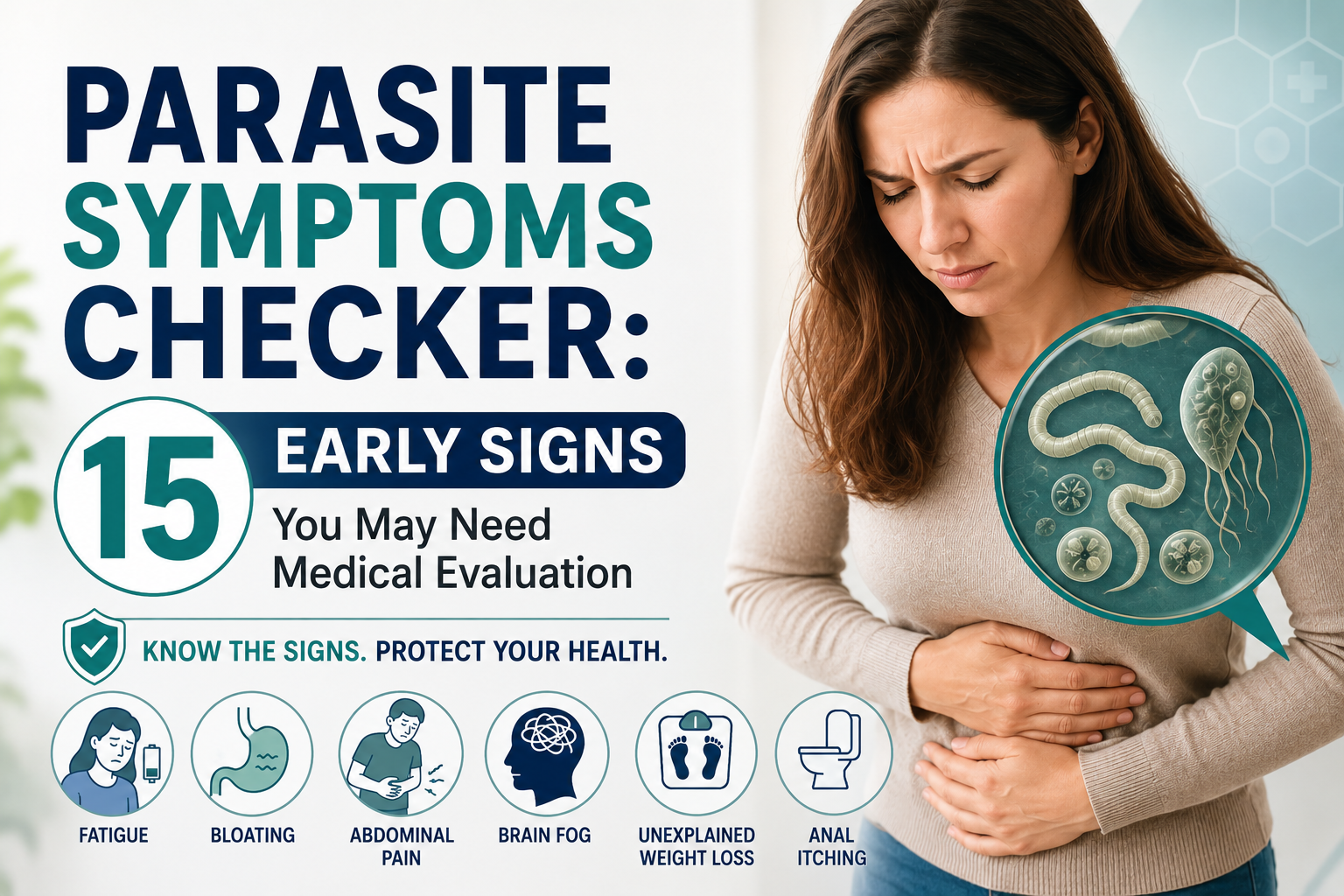
Parasite Symptoms Checker: 15 Early Signs You May Need Medical Evaluation
Parasite symptoms are far more common than most people realize. The CDC notes that more than a million people in the U.S. get sick from giardia alone every year, and intestinal parasites affect over a billion people worldwide. Yet many infections don’t announce themselves with dramatic symptoms — they show up as vague, easy-to-dismiss issues that overlap with dozens of other conditions.
This guide walks through 15 early warning signs associated with parasitic infections, grounded in guidance from the CDC, so you know what patterns are worth bringing to a doctor. It’s meant to help you recognize a cluster of symptoms, not to diagnose anything on its own.
Why Parasites Are Easy to Miss
Many parasitic infections are mild or entirely asymptomatic. Pinworm infection, the most common worm infection in the U.S., often produces no symptoms at all — and when it does, the main sign is simply nighttime anal itching. Giardia, the most frequently reported intestinal parasite in the U.S., tends to cause diarrhea and fatigue that build gradually rather than hit all at once. This is exactly why a symptom checklist is useful: it helps you notice several small, seemingly unrelated issues together, rather than waiting for one unmistakable red flag.
15 Early Signs Worth Paying Attention To
1. Persistent Diarrhea or Watery Stools
Ongoing diarrhea — sometimes described as frequent, watery, or even “explosive” — is one of the most consistently reported symptoms of intestinal parasites, including giardia and cyclospora. Giardia-related diarrhea typically starts within one to two weeks of infection and can last two to six weeks, or longer in some cases.
2. Abdominal Pain or Cramping
Cramping and abdominal pain are common across many parasite types, from giardia and cyclospora to roundworm (ascariasis), which can occasionally cause more serious complications like intestinal obstruction in heavy infections.
3. Unexplained Weight Loss
Poor nutrient absorption and ongoing nausea can lead to gradual weight loss, particularly with heavier parasite burdens.
4. Persistent Fatigue
Fatigue that builds over days or weeks — separate from poor sleep — is a hallmark of giardia infection specifically, and is also linked to iron-deficiency anemia from blood-feeding parasites like hookworm.
5. Anal or Vaginal Itching, Especially at Night
This is the classic sign of pinworm infection: female pinworms migrate to the anal area at night to lay eggs, which causes localized itching and sometimes irritability from disrupted sleep. Occasionally the irritation can extend to the vaginal area.
6. Skin Rash or Localized Itching
A localized itchy rash can occur at the point where certain parasites, like hookworm larvae, penetrate the skin — often on bare feet after contact with contaminated soil.
7. Nausea and Vomiting
Nausea and vomiting are frequently reported with several parasite types, including roundworm and cyclospora infections, and tend to worsen after eating.
8. Bloating and Gas
Bloating, gas, and general gastrointestinal distress are common across most intestinal parasites as they disrupt normal digestion.
9. Iron-Deficiency Anemia or Paleness
Hookworm and whipworm infections can cause blood loss in the intestines, leading to anemia, fatigue, and paleness — a particular concern in young children and pregnant women.
10. Teeth Grinding (Bruxism) and Sleep Disturbance
Difficulty falling or staying asleep, restlessness, and teeth grinding have been documented as symptoms of pinworm infection, especially in children, likely tied to nighttime irritation and disrupted rest.
11. Poor Growth or Nutritional Deficiency in Children
Chronic infection with roundworm, whipworm, or hookworm is specifically associated with poor growth in children, making persistent GI symptoms in kids worth evaluating promptly.
12. Cough or Respiratory Symptoms
Some parasites, including roundworm and Strongyloides, migrate through the lungs during part of their life cycle, which can cause a cough or other respiratory symptoms — sometimes mistaken for a cold or asthma.
13. Muscle Pain
Muscle pain can accompany helminth (worm) infections as larvae migrate through body tissue, separate from any exercise or injury.
14. Loss of Appetite
Reduced appetite, sometimes alongside nausea, is a commonly reported symptom of pinworm and other intestinal parasitic infections.
15. Recurring or Long-Lasting Symptoms After Travel or Water Exposure
Symptoms that persist for weeks, especially after drinking untreated water, swimming in lakes or rivers, or traveling somewhere with less reliable sanitation, are a strong signal to get evaluated — some infections, like giardia, can become chronic and last for years if untreated.
When to See a Doctor
A single symptom from this list rarely means much on its own — most overlap with common, non-parasitic conditions like IBS, food intolerances, or anemia from other causes. But it’s worth scheduling an evaluation if you notice several of these symptoms together, especially after:
- Drinking untreated water (including well water, especially after flooding) or swimming in lakes, rivers, or ponds
- Traveling to a region with less reliable water sanitation
- Eating undercooked meat or fish
- Contact with soil or walking barefoot outdoors
- A household member or child with similar symptoms
A doctor can order the right tests — often multiple stool samples collected on different days, blood tests, or in some cases endoscopy — to check for parasitic infection specifically, since diagnosis usually can’t be made on symptoms alone.
FAQ
How long do parasite symptoms take to show up? It varies by parasite. Giardia symptoms typically start one to two weeks after exposure. Pinworm eggs take about one to two months to mature into egg-laying adults, so symptoms can take a while to appear after initial ingestion.
Can you have a parasite with no symptoms at all? Yes. Pinworm infection in particular is frequently asymptomatic, and many people carry parasites without ever knowing it, especially with low-level infections.
What’s the difference between a protozoan parasite and a worm (helminth)? Protozoa, like giardia and cyclospora, are single-celled organisms that mostly cause gastrointestinal symptoms. Helminths, like pinworms, hookworms, and roundworms, are worms that can cause GI symptoms plus effects like anemia, skin reactions, or respiratory symptoms depending on where they migrate in the body.
Are parasite cleanses a good way to treat this? Unsupervised “parasite cleanse” products are not the same as evidence-based antiparasitic medications like albendazole, mebendazole, or pyrantel pamoate, which are prescribed based on a confirmed diagnosis. Self-treating without a diagnosis can delay proper care or cause unwanted side effects.
When should I take my child to the doctor for suspected pinworms? If you notice nighttime anal itching, restlessness, or visible thread-like worms near the anus or in stool, it’s reasonable to contact a pediatrician. Diagnosis is often made using a simple “tape test” done first thing in the morning.
The Bottom Line
Parasitic infections are treatable in the vast majority of cases once properly identified. Self-diagnosis and unsupervised cleanses can do more harm than good, since they aren’t a substitute for accurate testing and prescribed medication. If this checklist resonates with what you’ve been experiencing, the safest next step is a conversation with a healthcare provider who can order the right tests and recommend evidence-based treatment.
This article is for informational purposes only and is not a substitute for professional medical diagnosis or advice. If you’re experiencing persistent or worsening symptoms, please consult a licensed healthcare provider.


Leave a comment